Resource Filter: Immuno-oncology
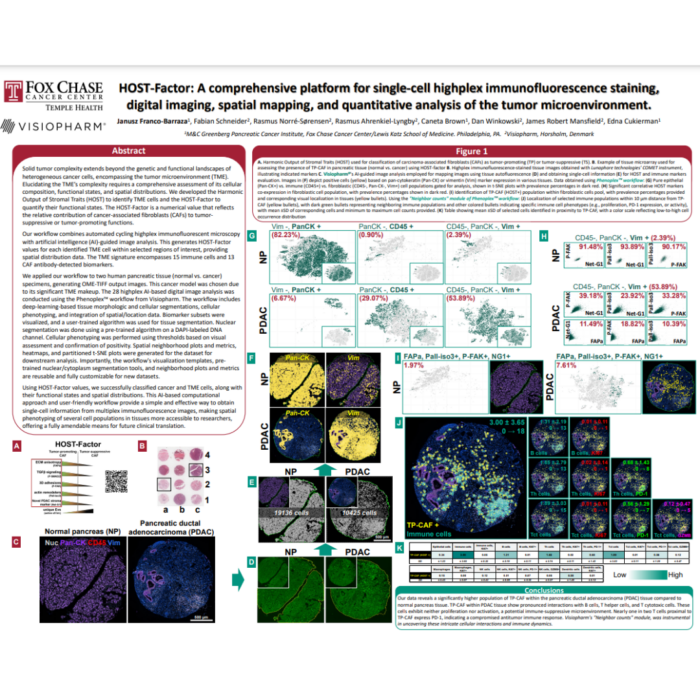
HOST-Factor: A comprehensive platform for single-cell highplex immunofluorescence staining, digital imaging, spatial mapping, and quantitative analysis of the tumor microenvironment.
Date
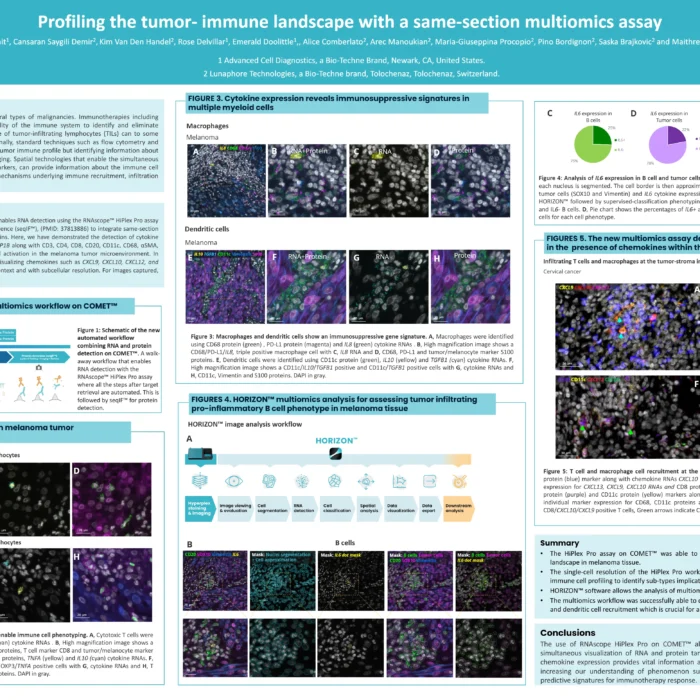
Profiling the tumor- immune landscape with a same-section multiomics assay
Date
Spatial omics techniques and data analysis for cancer immunotherapy applications
Date
Spatial omics techniques and data analysis for cancer immunotherapy applications
Date
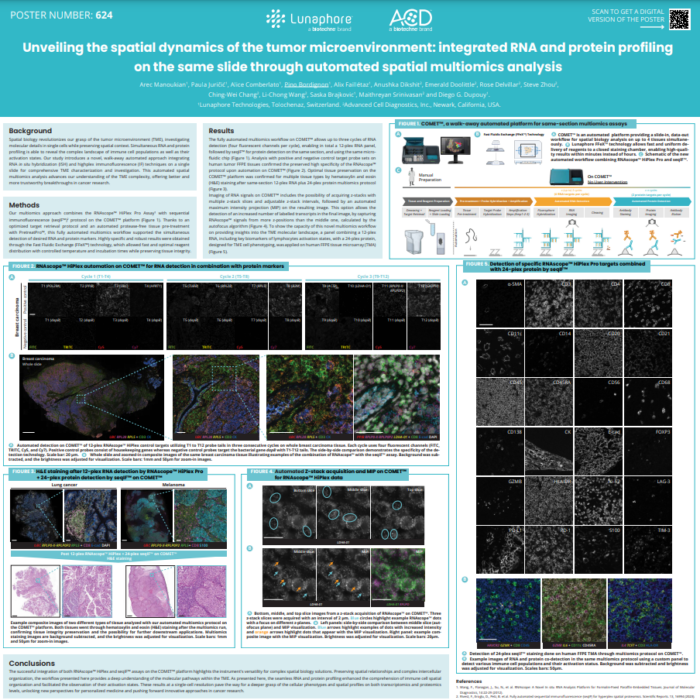
Unveiling the spatial dynamics of the tumor microenvironment: integrated RNA and protein profiling on the same slide through automated spatial multiomics analysis
Date
Molecular, Metabolic, and Subcellular Mapping of the Tumor Immune Microenvironment via 3D Targeted and Non-Targeted Multiplex Multi-Omics Analyses
Date
Comprehensive characterization of IFNγ signaling in acute myeloid leukemia reveals prognostic and therapeutic strategies
Date
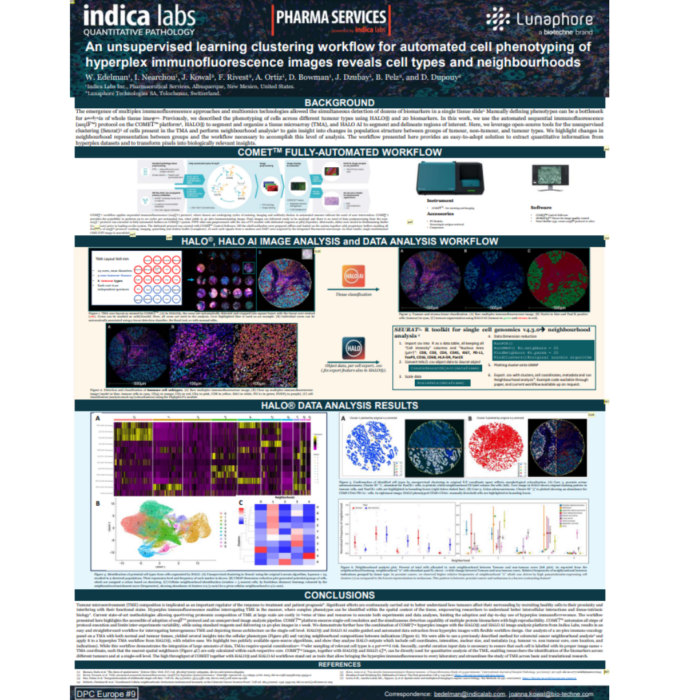
An unsupervised learning clustering workflow for automated cell phenotyping of hyperplex immunofluorescence images reveals cell types and neighbourhoods
Date
Adding space to TiME by sequential immunofluorescence: a new dimension for the spatial biomarkers painting in a clinical cohort of lymphoma cases
Date

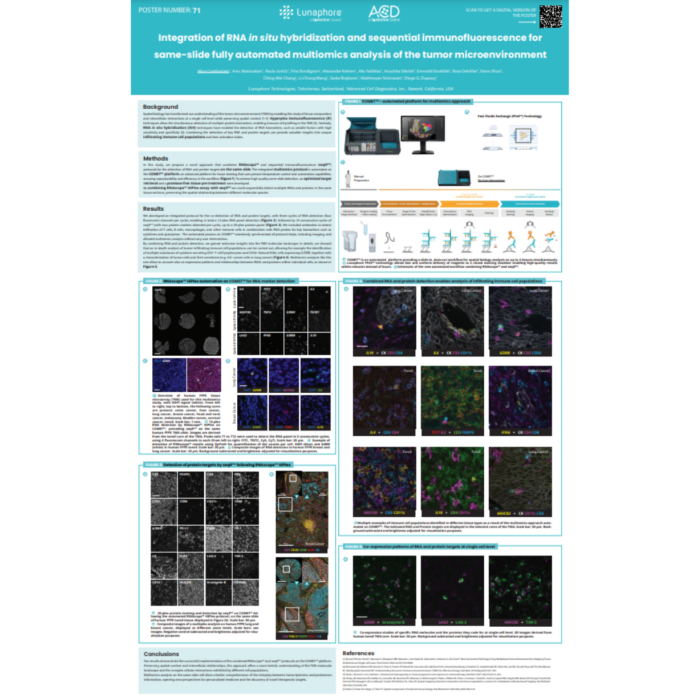
Integration of RNA in situ hybridization and sequential immunofluorescence for same-slide fully automated multiomics analysis of the tumor microenvironment
Date