Resource Filter: Plex Level
The association between the tumor immune microenvironments and clinical outcome in low-grade, early-stage endometrial cancer patients
Date
Automated multimodal fluorescence microscopy for hyperplex spatial-proteomics: Coupling microfluidic-based immunofluorescence to high resolution, high sensitivity, three-dimensional analysis of histological slides
Date
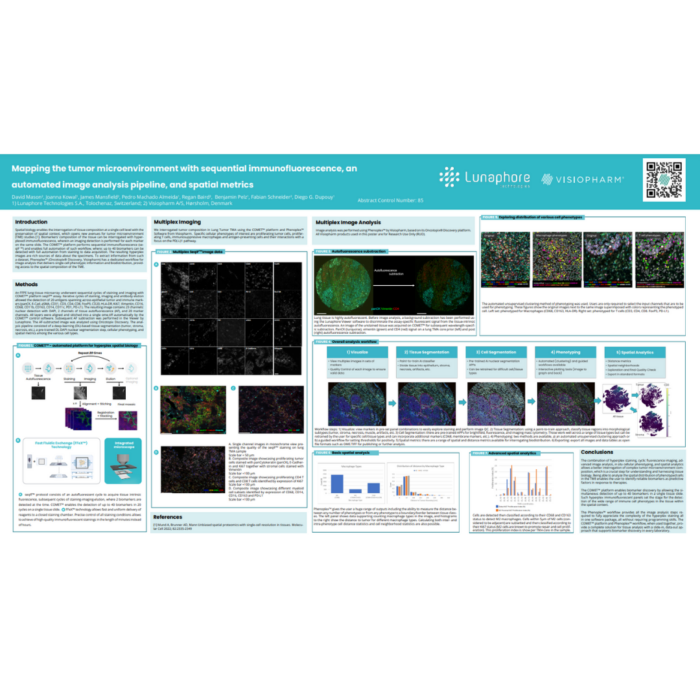
Mapping the tumor microenvironment with sequential immunofluorescence, an automated image analysis pipeline, and spatial metrics
Date
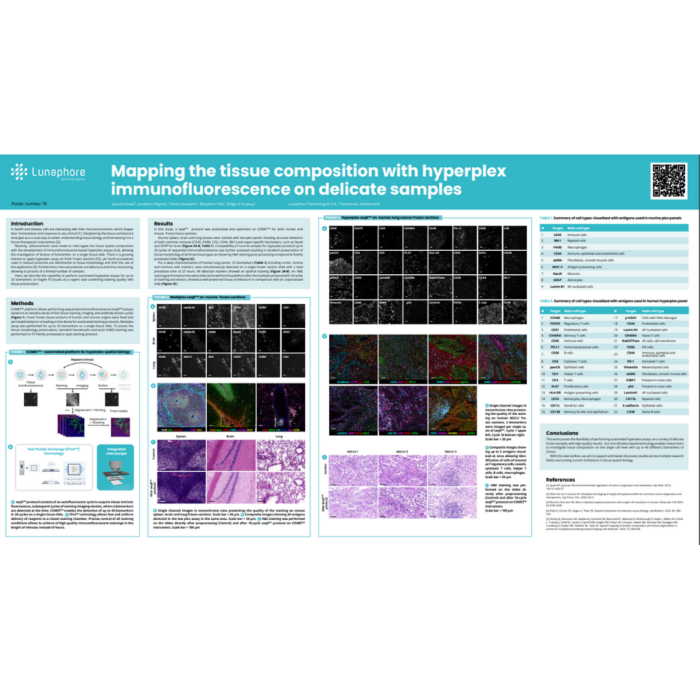
Mapping the tissue composition with hyperplex immunofluorescence on delicate samples
Date
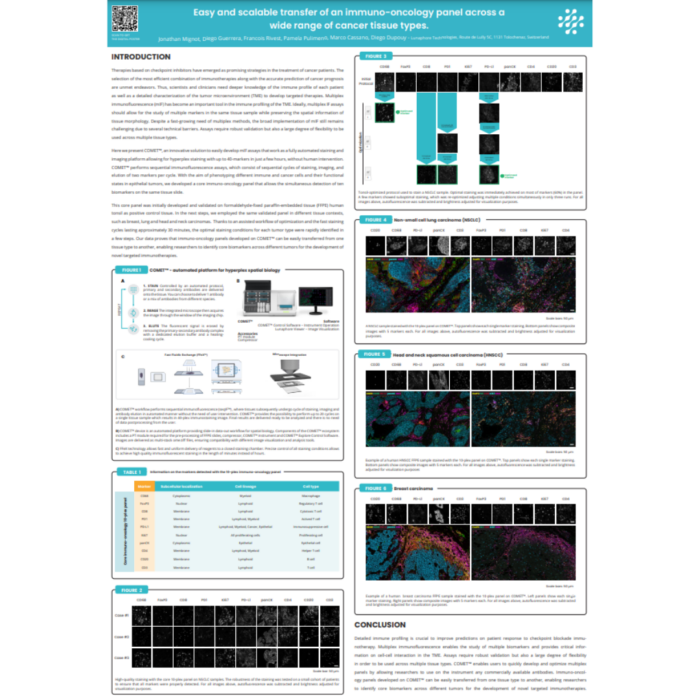
Easy and scalable transfer of an immuno-oncology panel across a wide range of cancer tissue types.
Date
Profiling the neurovascular unit unveils detrimental effects of osteopontin on the blood–brain barrier in acute ischemic stroke
Date
The immune suppressive microenvironment affects efficacy of radio‐immunotherapy in brain metastasis
Date
Proteomic Analysis of Low-Grade, Early-Stage Endometrial Carcinoma Reveals New Dysregulated Pathways Associated with Cell Death and Cell Signaling
Date
Microfluidics-assisted multiplexed biomarker detection for in situ mapping of immune cells in tumor sections
Date
Microfluidic-based immunohistochemistry combined with next-generation sequencing on diagnostic tissue sections for detection of tumoral BRAF V600E mutation
Date