SPYRE™ Amplification Kit
Make every marker count
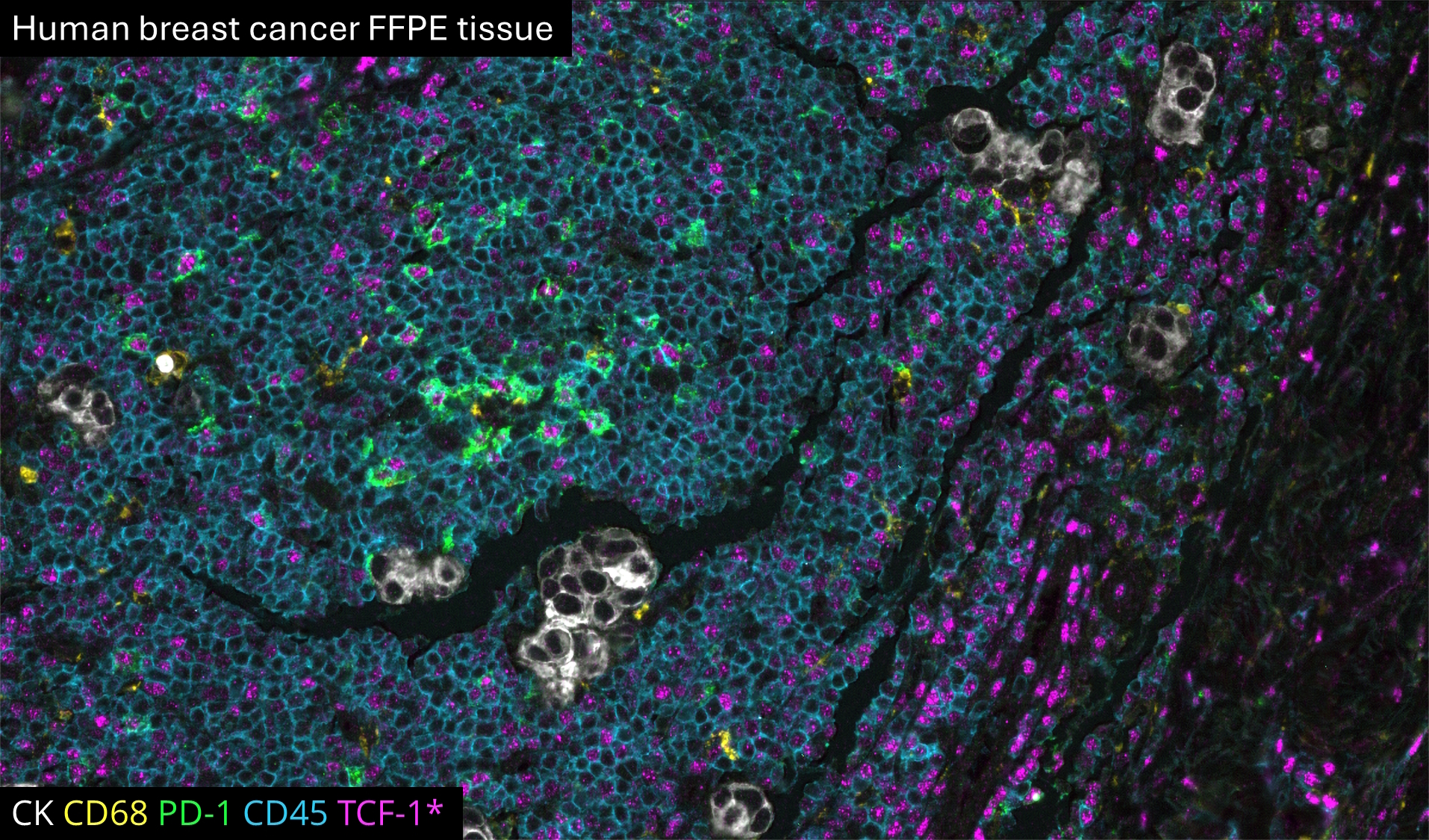
While most protein markers can be detected with standard indirect immunofluorescence methods, markers with low signal levels sometimes remain difficult to visualize. The SPYRE™ Amplification, fully integrated with the COMET™ platform, amplifies the signal for low-expressed or hard-to-detect markers. It offers high-sensitivity detection you need without compromising on accuracy.
The SPYRE™ Amplification advantages

Sensitive
Enhanced detection of challenging or low-expressed markers tailored to COMET™.

Quantifiable
Detect faint signals while preserving quantification accuracy, ensuring reliable results.

Flexible
Amplify the signal of your target in any cycle of your seqIF™ panel using any off-the-shelf primary antibody of mouse or rabbit origin. The amplified signal can be eluted for consecutive rounds of detection.
Seamless integration with COMET™
Based on sequential immunofluorescence (seqIF™) technology, the sequential layered amplification (seqLA™) method enhances the detection of secondary antibodies bound to primary antibodies by utilizing linker molecules.

Integrating seqLA™ into our COMET™ workflow has significantly enhanced our ability to detect low-abundance and challenging targets. In our recent study on epithelial–mesenchymal transition (EMT) in colorectal cancer, seqLA™ enabled the visualization of SNAIL, a transcription factor expressed at low levels, which was previously undetectable. Similarly, in our investigation of IL-6/JAK/STAT3 signalling, we were able to reliably assess phosphorylated STAT3 levels. The seqLA™ allowed us to expand our panels and gain deeper insights into how inflammatory signalling in tumour cells is regulated by the immune and stromal microenvironment, and how the immune contexture influences EMT and tumour budding.