Resource Filter: Colon
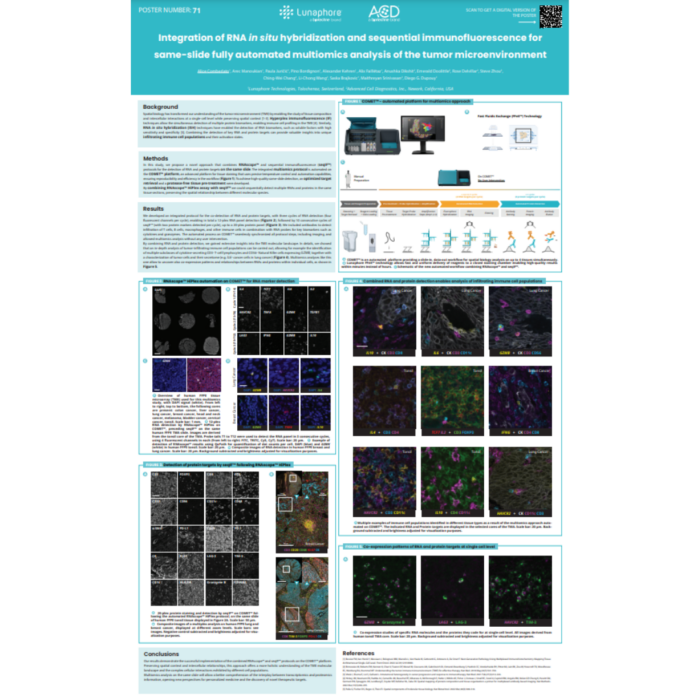
Integration of RNA in situ hybridization and sequential immunofluorescence for same-slide fully automated multiomics analysis of the tumor microenvironment
Date
Fully Automated Sequential Immunofluorescence (seqIF) for Hyperplex Spatial Proteomics
Date
Macrophage-endothelial cell crosstalk orchestrates neutrophil recruitment in inflamed mucosa
Date
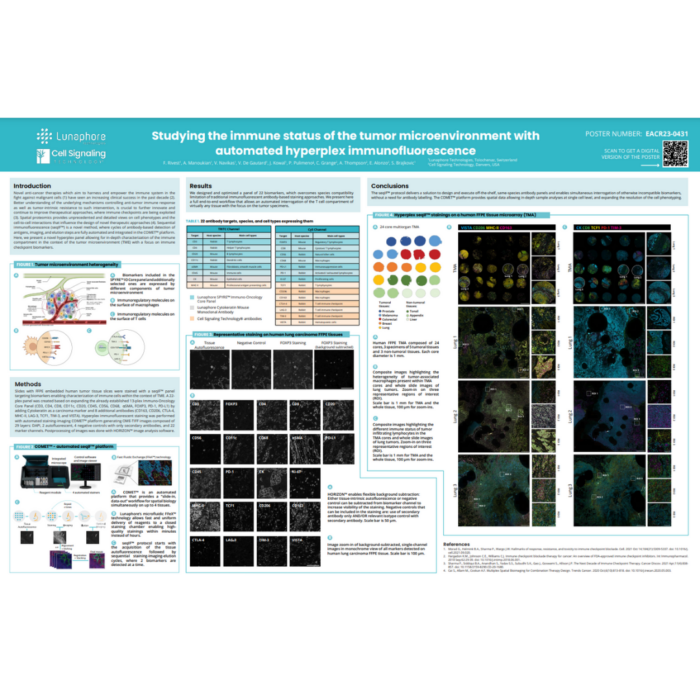
Studying the immune status of the tumor microenvironment with automated hyperplex immunofluorescence
Date
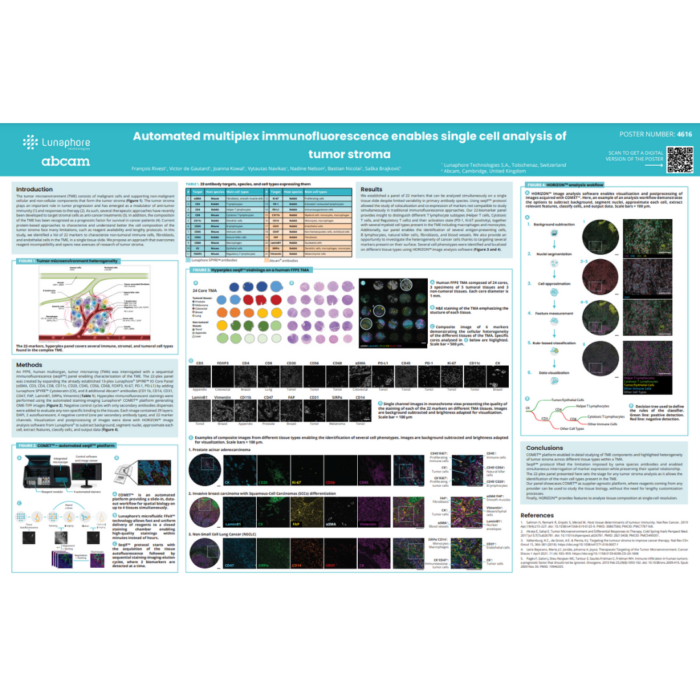
Automated multiplex immunofluorescence enables single cell analysis of tumor stroma
Date
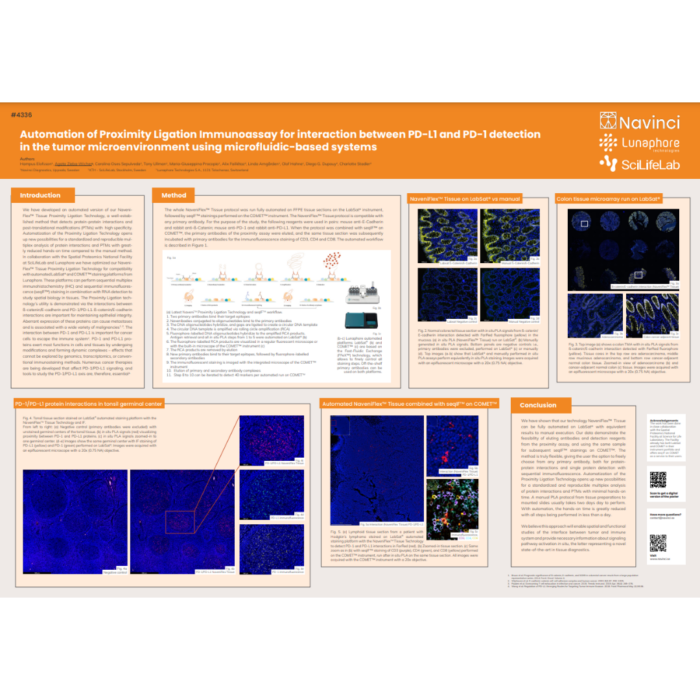
Automation of Proximity Ligation Immunoassay for interaction between PD-L1 and PD-1 detection in the tumor microenvironment using microfluidic-based systems
Date
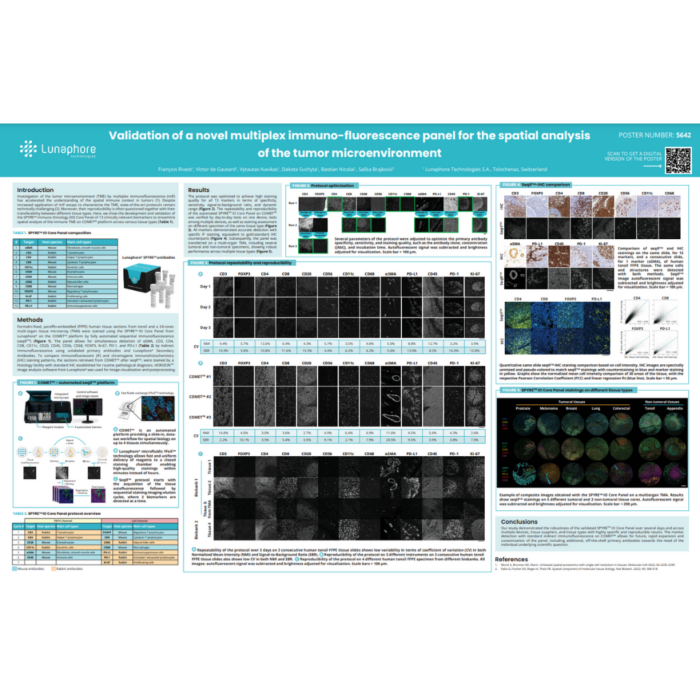
Validation of a novel multiplex immuno-fluorescence panel for the spatial analysis of the tumor microenvironment
Date
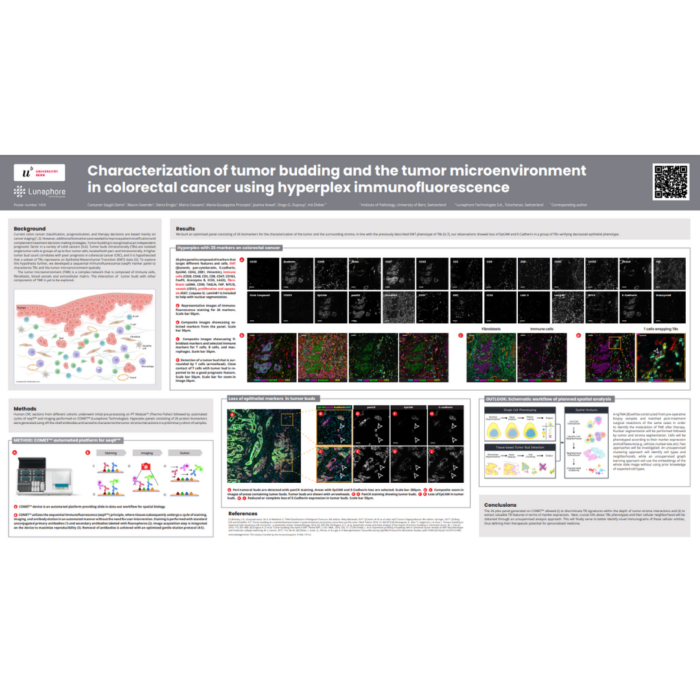
Characterization of tumor budding and the tumor microenvironment in colorectal cancer using hyperplex immunofluorescence
Date
Automated multimodal fluorescence microscopy for hyperplex spatial-proteomics: Coupling microfluidic-based immunofluorescence to high resolution, high sensitivity, three-dimensional analysis of histological slides
Date
Microfluidic-based immunohistochemistry combined with next-generation sequencing on diagnostic tissue sections for detection of tumoral BRAF V600E mutation
Date